
The digits of the eptimal system are written inside the tape of the kudamaf, in the same band as the letters and with the same cells. This choice is explained by use: in Kena, numbers appear above all in lists of measurements and captions of technical drawings, and no one wanted reading a figure to require changing line, tool, or hand.
The seven signs
The fundamental glyphs are three. 2 is a reversed S, 5 is an S, 0 is a vertical eight born from the union of the two. The other four digits are obtained from these with a suspended dash: below it means minus one, above it means plus one.
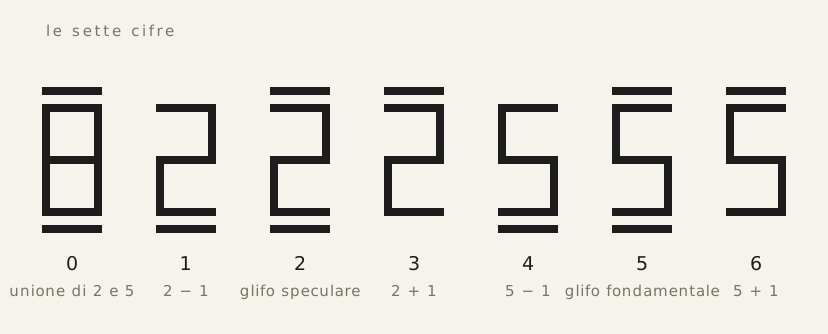
The seven digits. The three pure glyphs carry both dashes; the other four only one.
| value | glyph | dash |
|---|---|---|
| 0 | vertical eight | above and below |
| 1 | glyph of 2 | below (2 − 1) |
| 2 | reversed S | above and below |
| 3 | glyph of 2 | above (2 + 1) |
| 4 | glyph of 5 | below (5 − 1) |
| 5 | S | above and below |
| 6 | glyph of 5 | above (5 + 1) |
That 0, 2, and 5 carry both dashes is not a quirk: they are the three digits that do not derive from any other, and the double dash declares them complete. The symbolic value of the three signs — the mirror pair and their union — is described in Number System.
The dash and the comma
The dash runs at the same height as the comma, just outside the band, and is one cell long like it. The difference lies entirely in the attachment: the comma hangs from a short stem descending from the edge of the tape, the dash is suspended, with nothing connecting it to the letters.
Hence the reading rule, which admits no intermediate cases: fourth line attached to the tape, comma; fourth line suspended, digit. For the same reason a number never takes the word-start stroke, which would make it resemble a comma.
Multi-digit numbers
Digits are written one per cell, from the most significant, using positional notation in base 7.
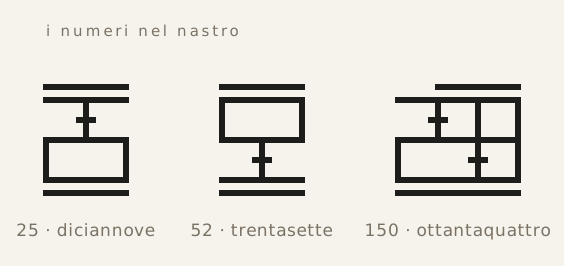
Three notable numbers from Solarian culture: 25 and 52, mirror images, and 150, which equals eighty-four.
There is no separator between the number and the words surrounding it: like everything else written, the number is a sequence of cells in the continuous tape, and it ends where its digits end.