
Phonotactics
The phonotactics of kudamaf establishes which sounds exist, in what order they can stand, and which combinations are forbidden.
Note
The complete lexicon, an Italian translator and a viewer that displays any text in kudamaf can be found in the language application.
Alphabet
There are only three vowels:
a e u
There is no i and no o: no word in the register contains them. There are fifteen consonants:
| Category | Consonants |
|---|---|
| dental and velar | t d k g |
| labial | b p |
| sibilant | s z sh |
| nasal and liquid | m n r l |
| fricative | v f |
The digraph sh counts as a single consonant and must be treated as one sign, both in syllable counting and in writing, where it occupies a single cell.
Syllables
Four syllabic forms are allowed: CV, CVC, VC, VCV (C stands for consonant and V stands for vowel). Every root is bisyllabic and ends in a consonant: this is a necessary condition, because the three derivational suffixes all begin with a vowel (see Grammar and Phonotactics) and two vowels can never touch, except between two consecutive words.
Consonant collisions
Twenty-three pairs of consonants are excluded from the language. The table is read by rows: the row gives the first letter, the column the second:
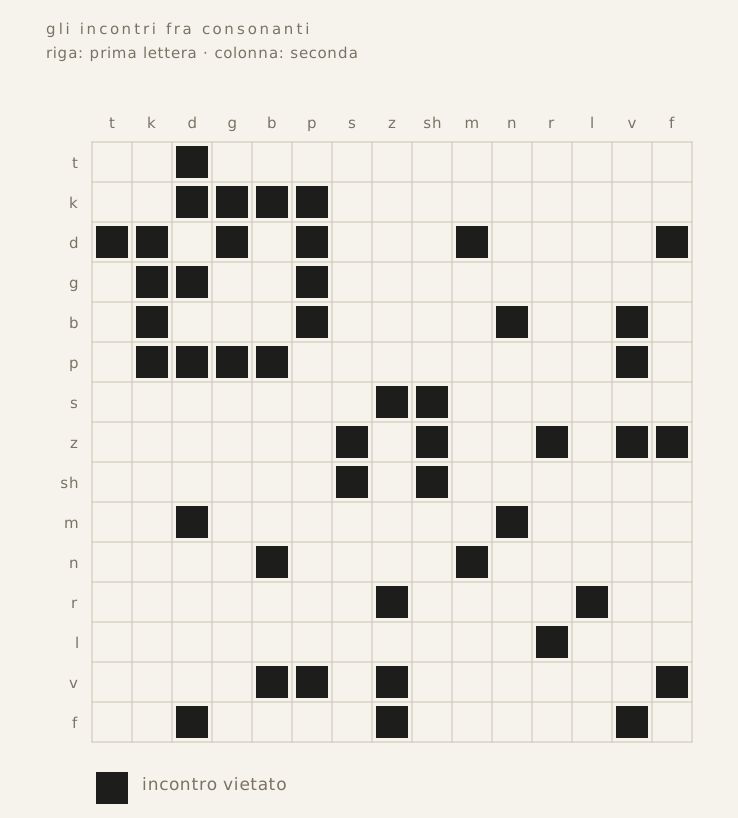
The filled cells are the combinations that the rule does not allow. The table is symmetrical, with a single exception.
The table’s only asymmetry is the directional prohibition of z before sh: in the reverse order, sh followed by z, the pair remains allowed.
Grammar
The grammar of kudamaf rests on a single principle: nothing agrees and nothing is irregular. There is no gender, no number, no declension, no auxiliaries, no defective verbs. Every piece of information that Earth languages spread across several words — person, tense, mood, aspect — here sits in a single place, always the same one.
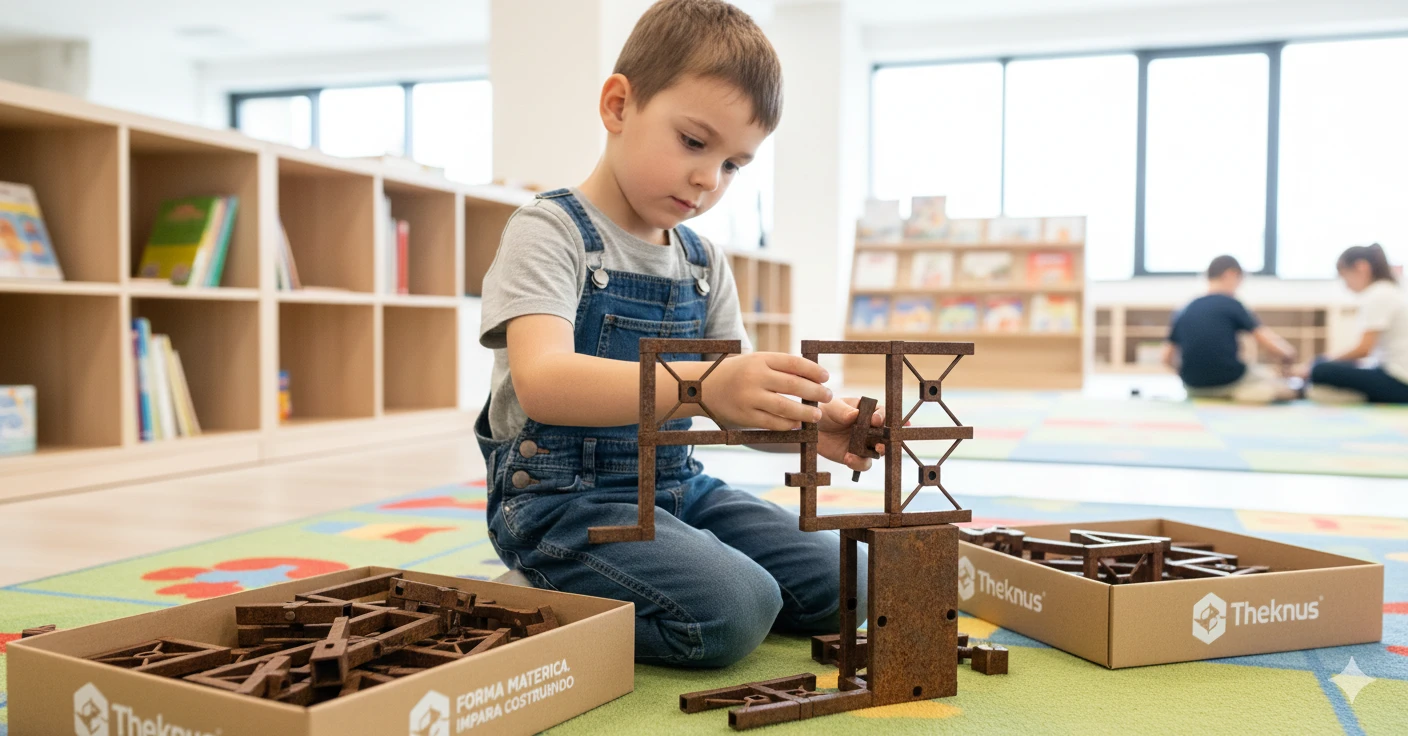
Words are assembled like pieces of a building-block game: always identical elements, predictable joints, no exceptions to learn.
The root and the three suffixes
Every word originates from a bisyllabic root ending in a consonant. The bare root is already the noun; from there, through three suffixes, three further forms can be derived: the verb, the adjective, and the adverb.
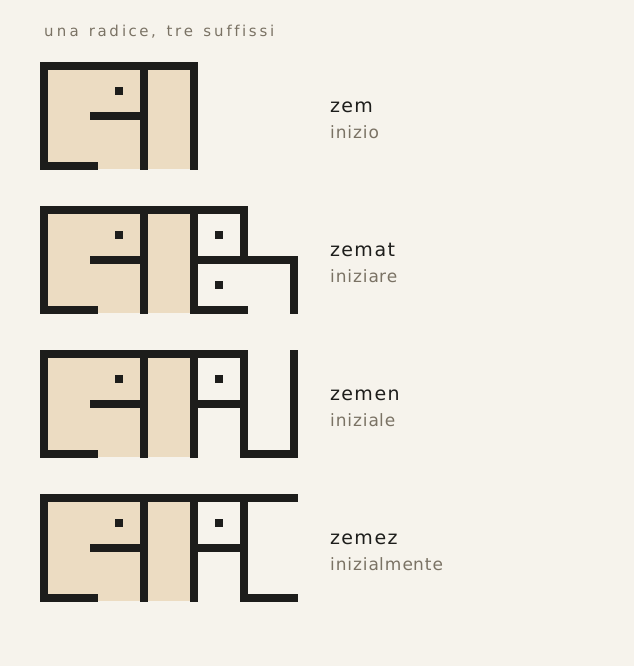
The three cells of the root stay fixed, the suffix is added at the end.
Although four forms can in principle be derived from any root, the theknusian vocabulary includes only the forms that have a meaning; if gemes is dog, gemesat is to bark and gemesen is canine, there is no verb corresponding to to act regarding the dog, so the vocabulary does not include it.
Numerals
The numbers from zero to six are the only exception to the bisyllabic root: they are monosyllables, and are said the way they are drawn (shan, sun, san, sen, zun, zan, zen; see Sistema numerico). They take the three suffixes of every root plus a fourth, theirs alone: -ur, the collective. sen three, senur trio.
Articles, gender, number
The noun never changes form: it has no gender and no plural. gemes means dog and dogs, sanup means girl and boy. The definite article is unique and invariable, ne; the indefinite is su. Number, when it matters, is expressed with a numeral; gender, when it matters, is expressed with a dedicated word (e.g.: ne sanup bagag, the male child).
The verb
The verb has three tenses and no paradigm to learn:
| Tense | Suffix |
|---|---|
| present | zemat — begins |
| past -ak | zematak — has begun, began |
| future -us | zematus — will begin |
Person is never marked on the verb: it is given by the pronoun, which for this reason cannot be omitted. Personal pronouns are organized into two series, g- for the singular and z- for the plural: ga I, ge you, gu he/she, za we, ze you (pl.), zu they, gus self. Possessives are formed by adding -na: gana mine, gena yours, guna his/hers, and so on.
Everything else is handled by seven invariable particles that stand before the verb and combine freely with one another:
| pe ongoing | pu completed | te hypothetical | tu imperative |
| sa can | se must | le passive |
The negation la opens the group and negates everything that follows.
.png)
The verbal group is assembled like a row of pieces: pronoun, particles, verb with its tense.
Prepositions, conjunctions, interrogatives
The prepositions are almost all vowel plus consonant: a of, ut to, ez from, ek in, uz with, ar above, ub below, um between, ur toward, ap for, av without, an against, am beyond, ud until, ep during, ush through.
The conjunctions belong to families that alternate the vowel on the same consonant: va and, ve or, vu but, ven neither, vur despite; fe because, fu since, fa so that, fem in fact; ra while, re before, ru after, rem until.
The interrogatives are short and invariable: u which, what; mu who; ba what; da where; de when; du why; ta how; tam how much. The particle dez corresponds to the Italian suffix -unque (“-ever”) and attaches to an interrogative: mu dez whoever, da dez wherever.
The subordinate clause
The language has no relative pronouns: subordinate clauses open with the conjunctions from the list above and are recognized, in writing, by the comma described in punctuation. Direct speech is no exception: it is a subordinate clause governed by the verb of saying, alnerat, and has no markers of its own.
Proper names and foreign words
Proper names and words coming from other languages are not written with special characters, but converted into the sounds available in kudamaf according to a stable table of correspondences. Missing vowels are replaced with the closest ones: i becomes e while o becomes a. In foreign terms, vowel sequences, diphthongs, and other combinations that do not normally belong to the phonotactics of kudamaf words are also allowed.
A surname like Ardei, for example, of Iridian origin, is thus recorded as Ardee, without preserving a second spelling in pazan. The conversion need not necessarily be reversible and may produce homonyms among originally distinct names; this is not considered a linguistic problem, because in registers people are distinguished through other identifying data, such as date and place of birth.